Water Softeners
Softeners sized to your water system's hardness and your household
Water Softener Installation in Fort Bend County
Less Scale, Clearer Glass, Water That Feels Softer
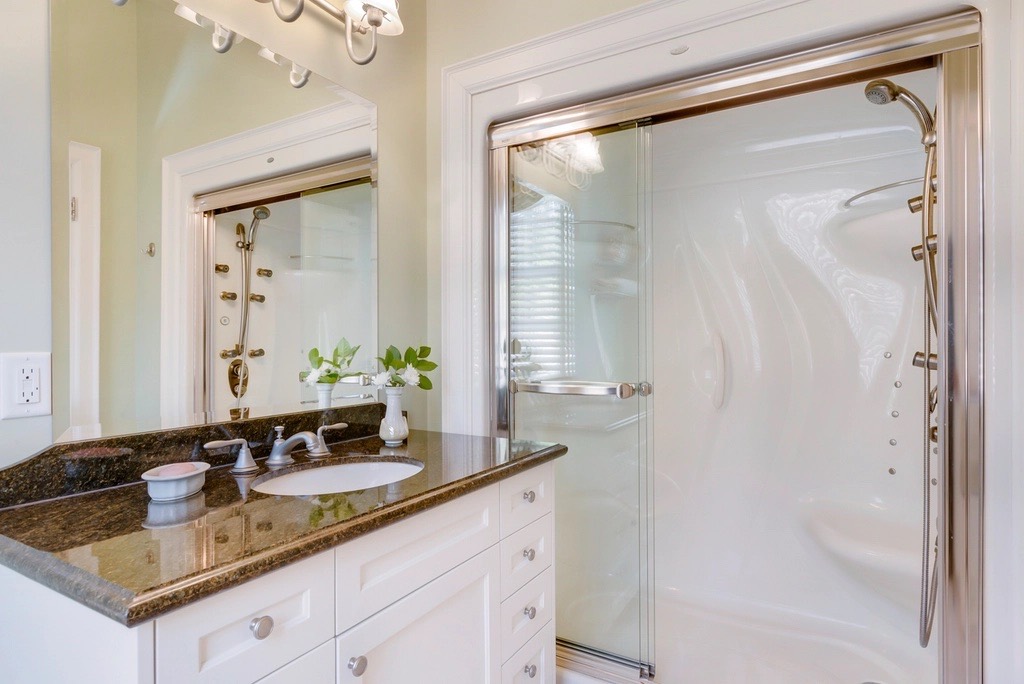
Hard water shows up slowly. A white ring forms around the base of the faucet, the shower glass never quite comes clean, and the dishwasher leaves a film on every glass. Inside the pipes and the water heater, the same minerals are building up where you can't see them.
A water softener stops that where water enters your home. It removes the calcium and magnesium that cause scale, so every faucet, shower, appliance and water heater gets softened water. Soap lathers more easily, glassware rinses clearer and fixtures stay cleaner for longer.
We size each softener from two things: the hardness your water system reports and the way your household uses water. To talk through your home, call 281-979-3405 or request a quote online.
How a Water Softener Works
Most home softeners use ion exchange. A resin tank holds a bed of small charged beads. As hard water flows through, the beads hold on to calcium and magnesium and release sodium (or potassium) in their place.
When the resin is loaded with hardness minerals, the softener regenerates: the control valve draws salty water (brine) from the salt tank through the resin, flushes the calcium and magnesium to a drain, and recharges the beads. A demand-initiated valve meters the water you actually use and regenerates only when the resin needs it, which the EPA's WaterSense guide recommends for saving water and salt.
Regeneration uses water. NSF/ANSI Standard 44, the standard for residential softeners, includes a voluntary efficiency rating for softeners that use 5.0 gallons of water or less per 1,000 grains of hardness removed. That rating and salt efficiency tell you more about a softener than the size of its tank.
Hard Water in Fort Bend County, System by System
There is no single "Fort Bend hardness." Water systems here draw from wells, treated surface water or a blend, and their hardness differs. Sample results from the Texas Commission on Environmental Quality show how much:
- City of Sugar Land (main system): 6.1 to 11.8 grains per gallon (104 to 201 mg/L), six samples, January 2025 to April 2026.
- City of Richmond: 7.3 to 13.5 gpg (124 to 231 mg/L), eight samples, January 2024 to June 2026.
- Fort Bend County WCID 2 (Stafford area): 2.3 to 10.3 gpg (40.1 to 176 mg/L), eight samples, January 2024 to March 2026.
- City of Fulshear: 3.2 to 9.5 gpg (55 to 162 mg/L), 90 samples, February 2024 to September 2026.
On the U.S. Geological Survey's scale, water above about 7 gpg (120 mg/L) is hard and above 10.5 gpg (180 mg/L) is very hard. All four systems recorded samples above 7 gpg, and a system with several sources can deliver different water to different streets, so we size from the range, not one number. Find yours on our hard water by water system page, or read about hard water treatment.
How We Size a Water Softener
Softener capacity is measured in grains: how much hardness the resin removes before it regenerates. Two numbers do most of the work.
- Hardness in grains per gallon, from your water system's published range (we size toward the upper end) or a test at your tap. If we have both, we tell you which one we relied on.
- Daily water use. The EPA estimates the average American family uses more than 300 gallons a day at home.
Multiply them for grains per day. A household using 300 gallons a day at 10 gpg needs about 3,000 grains a day, so weekly regeneration takes roughly 21,000 grains of usable capacity. We also check peak flow, so two showers and the dishwasher can run at once without a pressure drop. An undersized softener regenerates too often; an oversized one wastes salt and water. Your quote states the capacity we chose and why.
-
Detailed Quote, Line by Line
Equipment, labor, site work and exclusions, itemized before anything is scheduled.
-
Your Water Report, Read First
We read your water system's published report before we recommend anything.
-
Expert Installation
Experienced installers working with us handle every install, start to finish.
-
Local to Fort Bend County
Based in Fort Bend County and focused on homes across the county.
Curious about your water?
Get a quote today
Tell us what you're noticing and your ZIP code. We find your water system, read its latest report, and come back with a plain-language recommendation and a quote.
Get a QuoteThe Softener Loop in Your Garage
Many newer Fort Bend homes were built with a softener loop: the main water line brought out in the garage with an inlet and outlet ready for a softener or filter, often with a drain and an outlet nearby. With a loop, installation is mostly connecting the equipment, running the drain line and programming the valve. Homes without one need a tie-in at the main line, ahead of the water heater, and we list that work in the quote. The EPA notes that some local jurisdictions restrict softener discharge, so we check what applies at your address.
After you approve a quote, installation is performed by expert installers working with us. We set the valve for your water, show you the bypass, and leave the salt and maintenance schedule in writing.
Tankless Water Heaters and Scale
Heat turns dissolved hardness into scale. The U.S. Geological Survey explains that heated hard water can leave calcium carbonate deposits that shorten equipment life and raise heating costs. In a tankless heater, that scale forms inside a compact heat exchanger, where it can cut flow and efficiency. Many tankless manuals list water-quality limits and a descaling schedule. If your system reports hard water, a softener ahead of the heater reduces how much scale forms. Tell us the heater's model and we'll size with its requirements in mind.
Water Softener or Salt-Free Conditioner?
"Salt-free softeners" and "water conditioners" are sold alongside softeners, but they do a different job.
- A softener removes hardness. Ion exchange takes calcium and magnesium out of the water, and a hardness test after a working softener reads close to zero.
- A conditioner does not remove hardness minerals. Most try to change how the calcium behaves so less of it sticks as scale. The minerals stay in the water, so a hardness test reads the same, soap still reacts with them, and spots can still form as water dries.
The EPA WaterSense guide points buyers to NSF/ANSI 44 for water softeners and IAPMO/ANSI Z601 for scale reduction devices. A conditioner can make sense where a drain or salt isn't an option, but if you want softened water, you need a softener. We'll tell you plainly which fits your home.
Salt, Upkeep and Service
Check the brine tank about once a month; harder water and bigger households use salt faster. Potassium chloride can replace sodium chloride in many softeners, though the settings may need adjusting. If the salt level never drops, look for a salt bridge, a hard crust that hides an empty brine well. And if your household or your water changes, the valve settings should too.
A softener doesn't remove chlorine or chloramine, so many homes add a whole-home carbon filter ahead of it, which also protects the resin. For systems we installed, we provide maintenance visits, softener repair and salt delivery: see service and maintenance or call 281-979-3405.
Water Softener FAQs
What size water softener do I need?
Multiply your water's hardness in grains per gallon by your household's daily water use, then by the days you want between regenerations, often about a week. A household using 300 gallons a day at 10 gpg needs roughly 21,000 grains of usable capacity. We also check peak flow so pressure holds up.
Does a water softener remove chlorine or chloramine?
No. A softener removes hardness minerals and doesn't change taste or smell. For chlorine you need a carbon filter ahead of the softener; for chloramine, catalytic carbon. See chloramine removal.
Is a salt-free water conditioner the same as a water softener?
No. A softener removes calcium and magnesium by ion exchange. A salt-free conditioner leaves them in the water and tries to reduce the scale they form. Softeners are tested to NSF/ANSI 44; scale reduction devices to IAPMO/ANSI Z601.
Do I need a water softener for a tankless water heater?
If your water system reports hard water, a softener is the most direct way to reduce scale in a tankless heat exchanger. Check the heater's manual for its water-quality limits and tell us the model.
Does softened water contain sodium?
Yes, some: ion exchange swaps hardness minerals for sodium, so harder water gets more. If you watch your sodium intake, ask your doctor. Potassium chloride is an alternative, and an under-sink reverse osmosis system reduces sodium in drinking water.
Can a softener be installed on the loop in my garage?
Usually, yes. A pre-plumbed loop is built for a softener or filter, and most installs on an existing loop take part of a day. We confirm the loop, drain and power before we quote.
Benefits of Working With an Expert Team
A softener is only as good as its sizing and setup. We read your water system's hardness results, size the softener to your household, and lay out every part of the job in a detailed quote before anything is scheduled.
-
Detailed Quote, Line by Line
Equipment, labor, site work and exclusions, itemized before anything is scheduled.
-
Your Water Report, Read First
We read your water system's published report before we recommend anything.
-
Expert Installation
Experienced installers working with us handle every install, start to finish.
-
Local to Fort Bend County
Based in Fort Bend County and focused on homes across the county.
Say Goodbye to Hard Water with Fort Bend Water Pros
Tell us what you're noticing, from crusty faucets to a tankless heater you want to protect, and your ZIP code. We'll find your water system, check its published hardness and send a quote for a softener sized to your home. Call 281-979-3405 or contact us online.

Get the Water You Deserve
Talk to the Fort Bend Water Pros team today
Fill out the form below. We find your water system, read its latest report, and reply with a plain-language recommendation and a quote. No pressure, no commitment.