Rosenberg
Water softeners, whole-home filtration & reverse osmosis in Rosenberg, TX
Water Filtration Systems in Rosenberg
Better Water for Rosenberg Homes
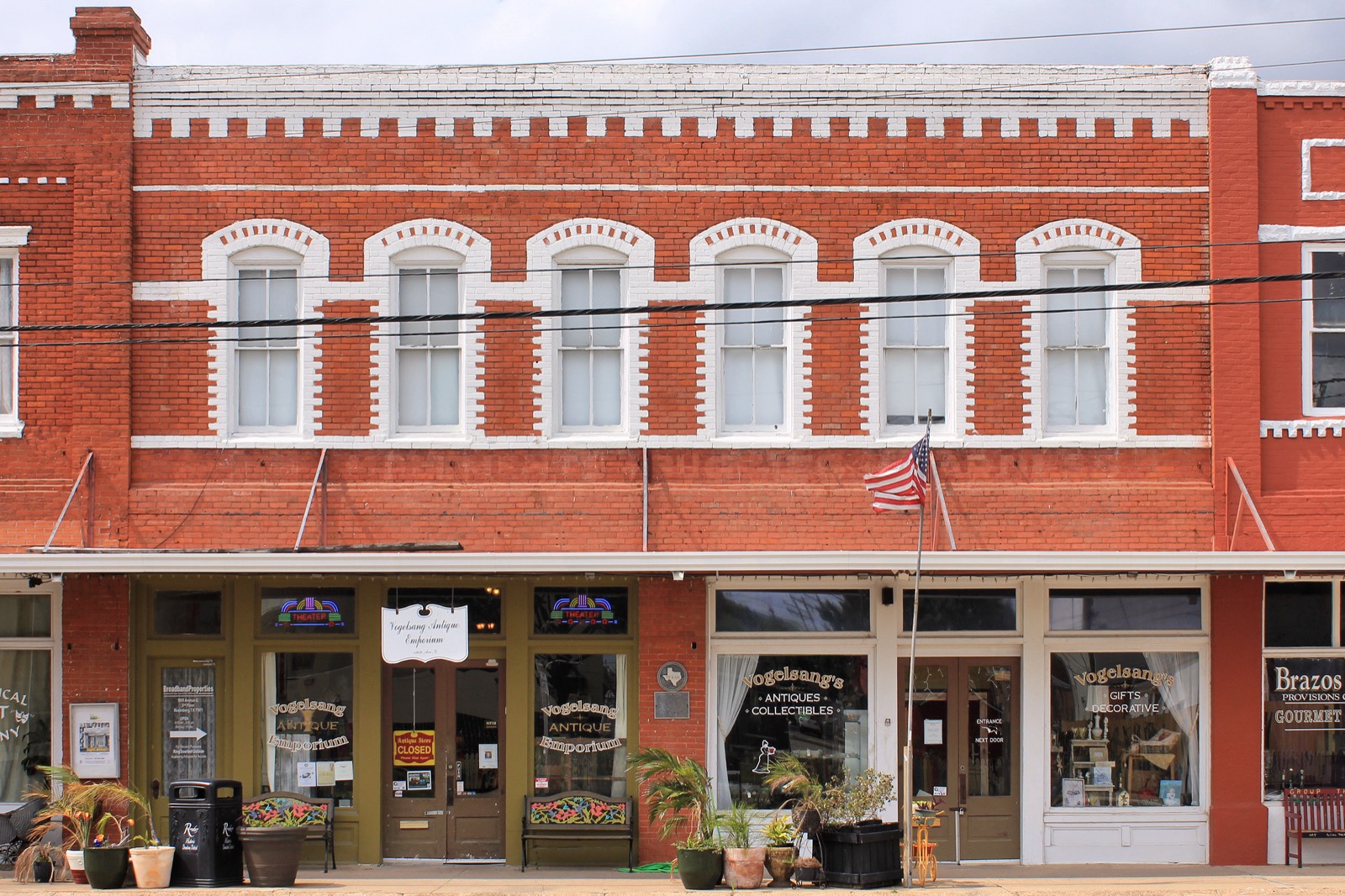
Rosenberg's historic downtown still has buildings like the Vogelsang Building, built in 1910 and now a Recorded Texas Historic Landmark. Out from downtown, the city and its surroundings have grown into communities such as Summer Lakes, Bonbrook Plantation and Walnut Creek. Depending on the street, water comes from the City of Rosenberg's own system or from a utility district, and several of those districts buy their water from the city.
Rosenberg's water is also in the middle of a change. The city is shifting from wells toward river water, and that shift touches the two things that decide which equipment makes sense in your home: hardness and disinfectant. If you've noticed a different smell in the shower, spots on the glass or scale on the faucets and wondered what's behind it, we can help you sort it out.
We read your water system's latest report, explain what it says in plain terms and build a recommendation around it. Call 281-979-3405 to talk it through.
Where Rosenberg's Water Comes From
The City of Rosenberg's system serves about 43,000 people. Its 2025 water quality report describes the supply as groundwater from the Evangeline and Chicot aquifers plus surface water bought from the Brazosport Water Authority, which draws it from the Brazos River in Brazoria County. The surface water enters the city's system at Water Plant 8 on Meyer Road; the other plants listed in the report draw from wells.
- Disinfectant: chloramine. The city's water conversion page states that Rosenberg uses chloramine. Its 2025 report lists the residual as "Chlorine Residual, Total," averaging 1.84 parts per million (ppm) within a range of 1.33 to 2.64, without naming the type in that row. The city also posted a temporary switch to free chlorine from June 1 to June 22, 2026, after which the system returned to chloramine.
- Hardness: one figure, moderately hard. The 2025 report, which presents results for the city's water and for the Brazosport water it buys, lists a 2025 total hardness of 94.3 mg/L, about 5.5 grains per gallon (gpg), in the U.S. Geological Survey's moderately hard band. It is a single number, not a range of dated samples, and we don't have state sample results for the city's system on file yet, so for sizing a softener we treat it as a starting point and test at the tap when it matters.
Rosenberg's Move From Wells to River Water
Like much of Fort Bend County, Rosenberg is cutting back on groundwater to slow land subsidence. The city's water conversion page says the Fort Bend Subsidence District's mandate calls for a 30% reduction in groundwater use now, and that by 2027 the city must comply with a 60% reduction. Rosenberg began moving from groundwater alone to a combination of groundwater and surface water in June 2018, and it adopted chloramine ahead of the first stage of surface water.
What can a larger share of river water mean in your home? We won't predict numbers, but the questions are clear:
- Disinfectant. The city uses chloramine, and short free-chlorine maintenance periods like June 2026's are a common practice on chloramine systems. Reducing chloramine takes catalytic carbon, and carbon sized for chloramine also copes with the free-chlorine periods.
- Hardness. River water and well water carry different minerals. As the share of each changes, the hardness at your tap can change too, and it may differ depending on which plant feeds your neighborhood. A softener set from one year's figure should have its setting checked when new figures come out.
- Taste and odor. The city says it runs tests, from corrosion studies to taste tests, to minimize noticeable changes. Some households still notice a difference and decide to filter.
- Fish tanks and home dialysis. The city warns that chloraminated water may be toxic to fish and that dialysis pretreatment must remove chloramine. Follow the city's guidance and your dialysis provider's instructions.
For the wider picture across the county, read chloramine conversions in Fort Bend MUDs.
Districts That Buy Water From Rosenberg
Rosenberg's water doesn't stop at the city limits. Federal records list the City of Rosenberg as the water source for several Fort Bend County MUDs, and their 2025 reports show how differently that can turn out:
- MUDs 152, 155, 158 and 218 each named chloramine, with annual averages from 2.94 to 3.39 ppm.
- MUD 66, also recorded as buying from Rosenberg, named free chlorine, averaging 3.24 ppm.
- MUD 253 is recorded with a connection to the city but pumps from its own well. It named free chlorine (average 1.6 ppm), and its one state hardness sample, from June 23, 2025, measured 5.3 gpg.
Most of these districts haven't published a hardness figure at all. If you're on one of them, a test at your tap fills the gap, and your district's own report, not the city's, is the one to read for the disinfectant.
Sizing Equipment for Rosenberg Water
At the moderate hardness the city's report lists, a water softener is a choice rather than a must for some households. Households tired of spotted glass and scale on fixtures, or with a tankless water heater to protect, may still want one, and it can be smaller than a softener for very hard water. Because the conversion may shift hardness, we note the setting we used so it can be adjusted later.
For taste and odor, a whole-home filter with catalytic carbon, sized to your peak flow, is the fit for chloraminated water. If drinking water is the priority, reverse osmosis at the kitchen sink is the answer, with pre-filters suited to chloramine to protect its membrane.
Why Rosenberg Homeowners Work With Us
Fort Bend Water Pros is based in Fort Bend County, and we work from your water system's published figures, not a sales script. You'll see which numbers we used and why we chose each piece of equipment.
Your quote is a detailed, itemized list covering equipment, labor, site work, exclusions, any required permits, maintenance intervals and how long the price stands. Nothing is scheduled until you approve it. Installation is performed by expert installers working with us. For systems we install, we also handle maintenance visits, filter replacement, softener repair and salt delivery; see service and maintenance.
Water Treatment Services in Rosenberg
Water softeners, whole-home filtration, chloramine removal and reverse osmosis for Rosenberg homes, plus commercial filtration for restaurants, cafés and offices.
Next door in Richmond? Our Richmond page covers the City of Richmond's river-and-wells system and Pecan Grove.
Rosenberg-Area Water Systems at a Glance
The City of Rosenberg's own figures are described above. This table lists the systems in our dataset for the Richmond and Rosenberg area, including the MUDs that buy Rosenberg water, with the disinfectant listed in each system's 2025 report and hardness from Texas Commission on Environmental Quality samples where any were published. Not sure which one is yours? Your bill names it, or ask us.
In our dataset, 14 public water systems in this part of the county have published figures we can cite: 8 reporting chloramine and 3 reporting free chlorine in their 2025 water quality reports.
| Water system | Disinfectant (2025 report) | Hardness |
|---|---|---|
| City of Rosenberg TX0790003 | Not named in a report we have read | 5.5 gpg 94.3 mg/L , reported in the 2025 report (source) |
| City of Richmond TX0790023 | Chloramine “CHLORAMINE (TOTAL)”: average 2.52, range 0.6-3.9 (2025 data, source) | 7.3-13.5 gpg 124-231 mg/L , 8 TCEQ samples, Jan 2024 to Jun 2026 (source) |
| Pecan Grove MUD TX0790132 | Free chlorine “Free Chlorine (ppm)”: average 2.41, range 0.80-4.90 (2025 data, source) | 3.6-7.7 gpg 60.8-132 mg/L , 6 TCEQ samples, Jan 2024 to Feb 2026 (source) |
| Fort Bend County MUD 134D TX0790562 | Chloramine “Chloramine (ppm)”: average 1.89, range 0.70-7.20 (2025 data, source) | No published samples on file |
| Fort Bend County MUD 155 TX0790488 | Chloramine “Chloramine (ppm)”: average 3.17, range 0.53-5.8 (2025 data, source) | No published samples on file |
| Fort Bend County MUD 152 TX0790487 | Chloramine “Chloramine (ppm)”: average 2.94, range 0.40-5.50 (2025 data, source) | No published samples on file |
| Fort Bend County MUD 121 TX0790393 | Chloramine “CHLORAMINE (TOTAL)”: average 2.1, range 0.6-3.3 (2025 data, source) | No published samples on file |
| Fort Bend County MUD 134E TX0790574 | Chloramine “Chloramine (ppm)”: average 1.68, range 1.00-2.40 (2025 data, source) | 2.1-7.9 gpg 35.9-135 mg/L , 26 TCEQ samples, Mar 2024 to Oct 2025 (source) |
| Fort Bend County MUD 218 TX0790582 | Chloramine “Chloramine (ppm)”: average 3.13, range 0.71-5.30 (2025 data, source) | No published samples on file |
| Fort Bend County MUD 158 TX0790466 | Chloramine “Chloramine (ppm)”: average 3.39, range 0.50-5.00 (2025 data, source) | No published samples on file |
| Fort Bend County MUD 253 TX0790639 | Free chlorine “Free Chlorine (ppm)”: average 1.6, range 0.62-3.25 (2025 data, source) | 5.3 gpg 89.8 mg/L , 1 TCEQ sample, Jun 2025 to Jun 2025 (source) |
| Fort Bend County WCID 3 TX0790368 | Not named in a report we have read | 11.1-13.5 gpg 190-230 mg/L , 6 TCEQ samples, Mar 2024 to May 2026 (source) |
| Fort Bend County MUD 66 TX0790486 | Free chlorine “Free Chlorine (ppm)”: average 3.24, range 1.11-4.50 (2025 data, source) | No published samples on file |
| Richmond Community Estates TX0790576 | Not named in a report we have read | 13.2-14.8 gpg 225-253 mg/L , 3 TCEQ samples, Feb 2026 to Sep 2026 (source) |
gpg = grains per gallon (17.1 mg/L as calcium carbonate = 1 gpg). The full county lists are on our chloramine by system and hard water by system pages.
-
Detailed Quote, Line by Line
Equipment, labor, site work and exclusions, itemized before anything is scheduled.
-
Your Water Report, Read First
We read your water system's published report before we recommend anything.
-
Expert Installation
Experienced installers working with us handle every install, start to finish.
-
Local to Fort Bend County
Based in Fort Bend County and focused on homes across the county.
Curious about your water?
Get a quote today
Tell us what you're noticing and your ZIP code. We find your water system, read its latest report, and come back with a plain-language recommendation and a quote.
Get a QuoteRosenberg Water FAQs
Does Rosenberg use chloramine?
Yes. The city's water conversion page states that Rosenberg uses chloramine for disinfection. Its 2025 water quality report lists a total chlorine residual averaging 1.84 parts per million. A whole-home filter for that water needs catalytic carbon.
How hard is Rosenberg's water?
The city's 2025 water quality report lists a total hardness of 94.3 mg/L, about 5.5 grains per gallon, which is moderately hard. That is one figure for the year, and the mix of well and river water is changing, so we test at the tap when a softener's sizing depends on it.
What is Rosenberg's water conversion?
It is the city's shift from groundwater toward surface water. According to the city, the Fort Bend Subsidence District's mandate calls for a 30% reduction in groundwater use now and a 60% reduction by 2027. Rosenberg began blending surface water into its supply in June 2018.
Will the conversion change my water's hardness?
It can. River water and well water carry different minerals, so the hardness at your tap may change as the mix changes. We don't predict the new figure; we read each new report and recheck softener settings when the numbers move.
Why did my water smell more like chlorine in June 2026?
The city temporarily switched its disinfectant from chloramine to free chlorine from June 1 to June 22, 2026, then returned to chloramine. Free chlorine has a stronger smell. A carbon filter sized for chloramine reduces free chlorine as well.
My MUD buys water from Rosenberg. Is my water the same as the city's?
Not necessarily. Among districts recorded as buying from Rosenberg, MUDs 152, 155, 158 and 218 reported chloramine in 2025, while MUD 66 reported free chlorine. Read your own district's report, or send us your address and we'll read it with you.
Water Treatment Services for Rosenberg Homes
-
Water Softeners
Sized to the hardness your system reports, with a setting you can adjust as the water changes.
Learn more -
Chloramine Removal
Catalytic carbon for every tap and shower on chloraminated water.
Learn more -
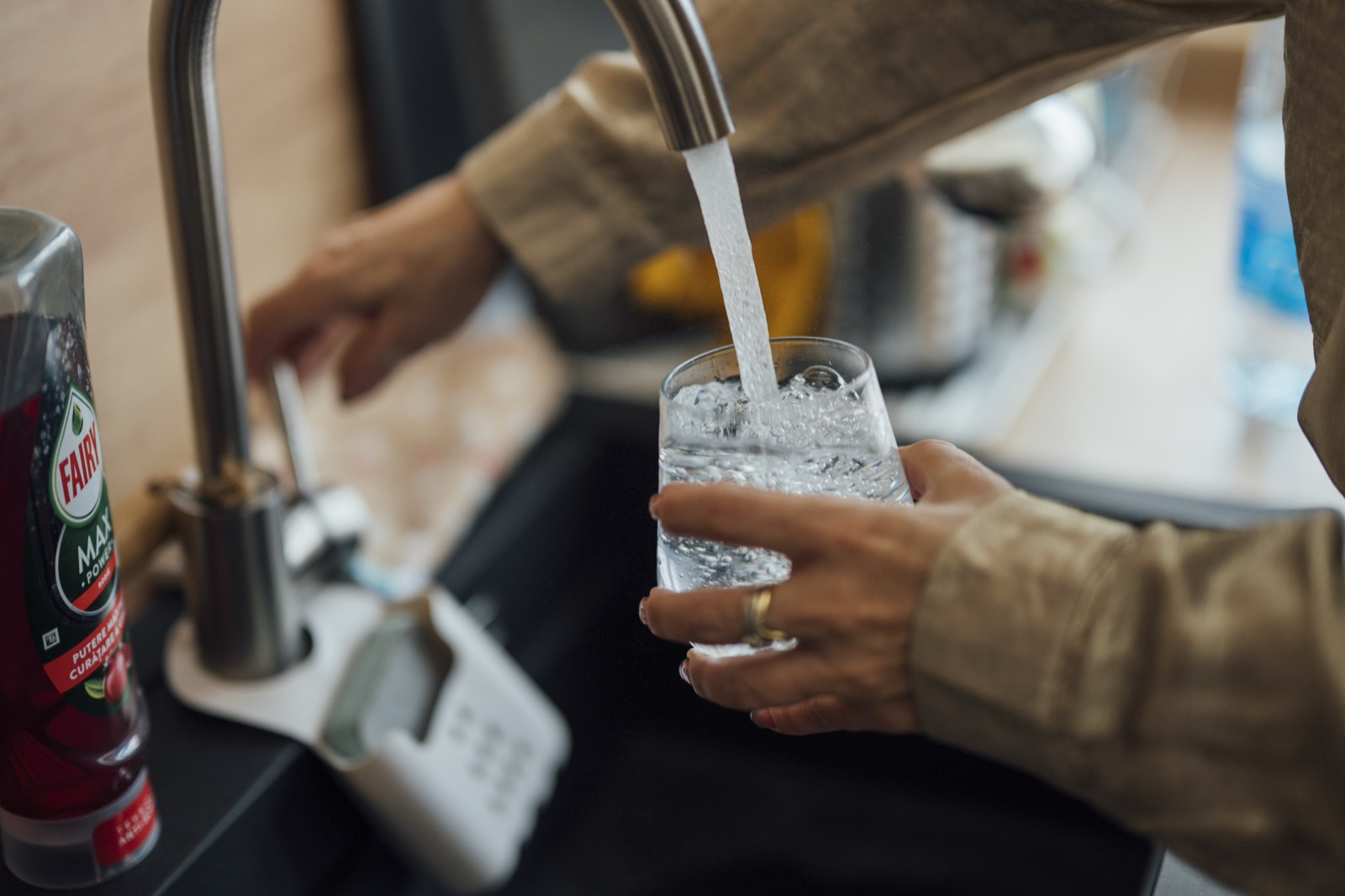
Reverse Osmosis
Drinking water at the kitchen sink, with pre-filters suited to chloramine.
Learn more
Benefits of Working With an Expert Team
Rosenberg's water is changing, and equipment chosen for last decade's well water may not suit the blend coming out of your tap now. We start from the current report, size for your household and spell out the whole job on paper.
-
Detailed Quote, Line by Line
Equipment, labor, site work and exclusions, itemized before anything is scheduled.
-
Your Water Report, Read First
We read your water system's published report before we recommend anything.
-
Expert Installation
Experienced installers working with us handle every install, start to finish.
-
Local to Fort Bend County
Based in Fort Bend County and focused on homes across the county.
Talk to Us About Your Rosenberg Water
Tell us your Rosenberg address or ZIP code and what you've noticed. We'll find your water system, read its latest report and send a recommendation and quote. Call 281-979-3405 or get in touch online.
Get the Water You Deserve
Talk to the Fort Bend Water Pros team today
Fill out the form below. We find your water system, read its latest report, and reply with a plain-language recommendation and a quote. No pressure, no commitment.